Polyaluminum Chloride (PAC)
Industrial Grade, CAS No.:1327-41-9
Products
Polyaluminum Chloride (PAC)
Chelating Agent
|
Product |
Industrial Grade, CAS No.:1327-41-9 |
|
|
Model |
Polyaluminum Chloride (PAC) |
|
|
Application |
Wide water adaptability: Stable performance regardless of water temperature and turbidity fluctuations, requiring less alkali for pH adjustment. |
Introduction
- High flocculation efficiency: Fast floc formation, compact floc particles, thorough sedimentation and excellent sludge dewatering performance for clear effluent.
- Wide water adaptability: Stable performance regardless of water temperature and turbidity fluctuations, requiring less alkali for pH adjustment.
- Comprehensive pollutant removal: Simultaneously removes SS, COD, chroma, total phosphorus and heavy metals including lead, chromium and cadmium.
- Low operation cost: Stable effective alumina content, low dosage, easy dissolution and storage, and synergistic effect when compounded with PAM.
- Strong working condition compatibility: Liquid type for automatic continuous dosing and solid type for intermittent small-scale treatment stations.
Technical Analysis Indicators
|
Item |
Indicator |
|---|---|
|
Appearance |
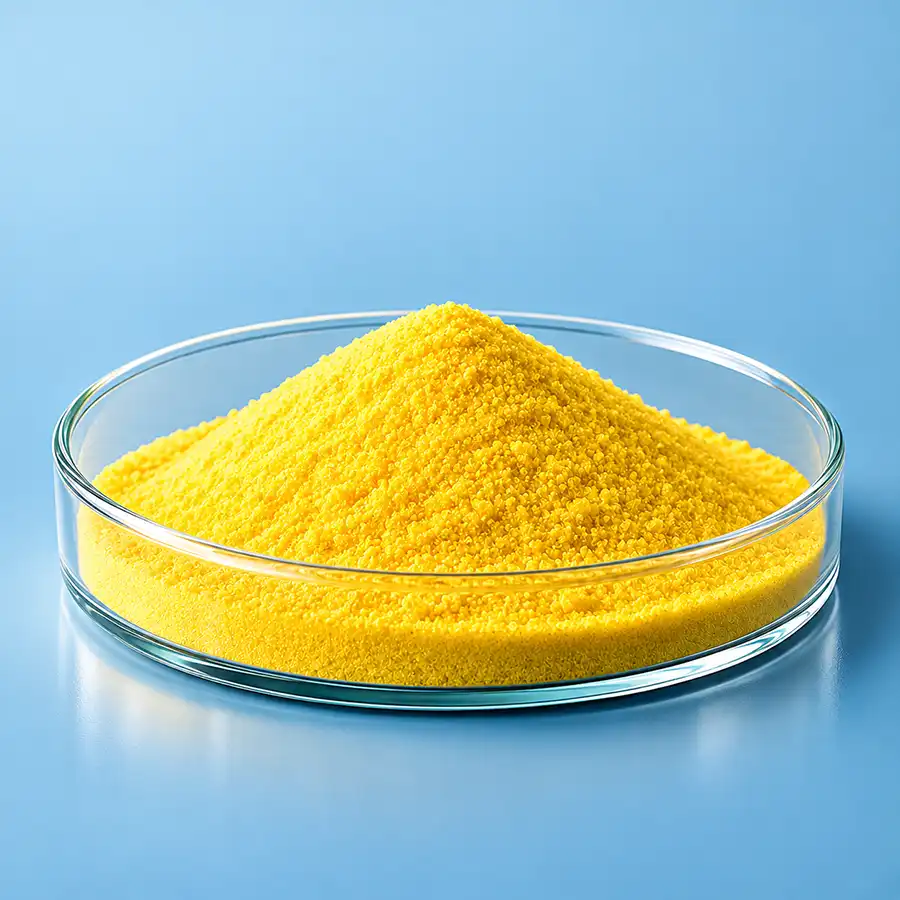
Yellow powder or granules |
|
Al2O3 |
≥28.0% |
|
Basicity |
20-95% |
|
Water insoluble substances |
≤0.40% |
|
pH value |
3.0~5.0 |
Usage and method of application:
- Solution preparation:
For solid industrial polyaluminum chloride, prepare 5%–10% aqueous solution with clean water under continuous stirring, keep stirring for 5–10 min until complete dissolution, then stand for maturation before dosing. Liquid polyaluminum chloride can be directly diluted with clean water according to on-site water flow for pump feeding without complex dissolution steps. - Reference dosage:
- Ordinary industrial wastewater: 10–200 mg/L (calculated by raw water volume);
- Wastewater with high turbidity, high chroma, high phosphorus or heavy metals: increase dosage to 200–500 mg/L as per beaker test results;
- Municipal domestic sewage: 50–150 mg/L for primary sedimentation and advanced purification.
- Mixing and dosing operation:
Add diluted PAC solution uniformly into the mixing tank at the front end of the treatment system. Maintain fast stirring for 3–5 minutes to enable sufficient contact between the chemical and pollutants, so as to form compact flocs. To optimize sludge dewatering and effluent clarity, add anionic polyacrylamide (PAM) after PAC reaction for synergistic treatment. - Key operation notes:
The prepared liquid medicine shall be used up within 24 hours to prevent activity attenuation from long-term storage. Adjust actual dosing amount dynamically according to real-time fluctuation of raw water turbidity, pH value and pollutant concentration. The applicable pH range of raw water is 5.0–9.0, with optimal treatment effect at pH 6.5–8.5. Do not mix polyaluminum chloride with alkaline agents like lime in the same dissolving tank, otherwise flocculation performance will be invalidated.
Package,storage and safety:
- 25kg bag.
- Store in a cool,dry place and avoid direct sun exposure.
- Valid for 12 months.
- Wear labor protection equipment when operating, and wash the skin in time when it comes into contact with the skin.